
As we continue our quest, we’re boldly venturing Beyond our Mind to seek the elusive Kingdom of God. But, as we discussed in our last entry, science and philosophy have shown us that our mind, as brilliant as it may be, is not quite cut out for the task. Our mind creates a map of reality that we mistake for the real deal, and while this map is incredibly useful for navigating the world and chatting with other humans, it’s just not going to cut it when it comes to finding the Kingdom of God. Why? Because the map is created by us, whether the Kingdom of God is, well, a divine creation.
So, if the Kingdom of God is not in the Map, we’ll have to take a wild leap outside the realm of our mind and into the vastness of reality. In other words, We must change the way we perceive things.
But how do we, STEM-trained, pasta-loving folks do that? Fear not,! In this entry we’re going to scan the Bible in search of clues; then we will put our scientific training to work and see if science provides a way to access reality beyond the confines of our map. So, buckle up, grab your magnifying glass, and let’s journey together into the unknown depths of Terra Incognita.
Three types of perception
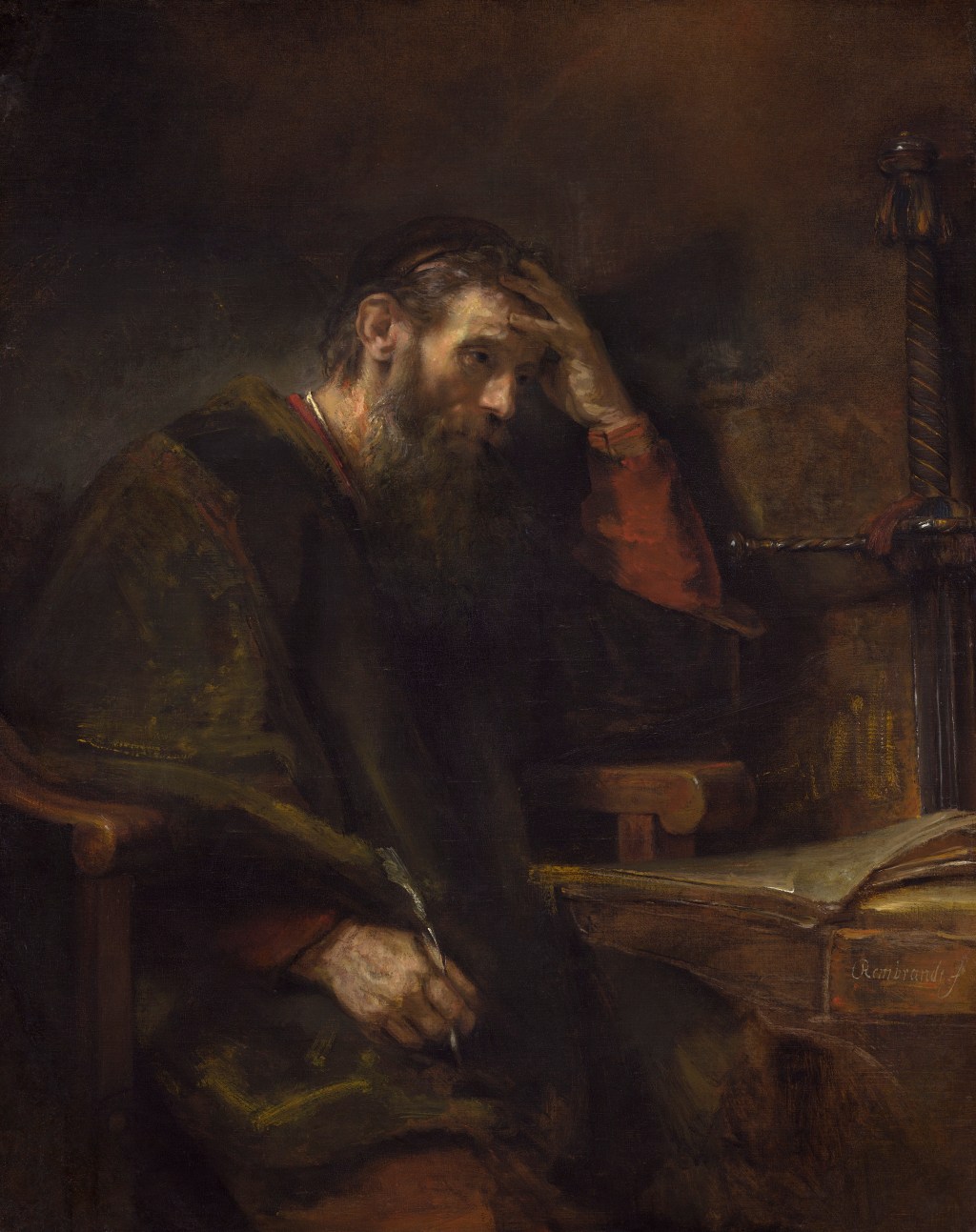
When we search for clues In the holy book, we find a recurring theme of the many ways to perceive reality. For instances, let’s take this paragraph from Saint Paul, the great apostle of the gentiles, writing to the church of Philippi ( Philippians 1:9), were talks about many kinds of perceptions:
And this is my prayer: that your love may increase ever more and more in knowledge and every kind of perception, to discern what is of value, so that you may be pure and blameless for the day of Christ…
Meanwhile, in the scientific realm, we have John Vervaeke, a cognitive scientist on a mission to unravel the mysteries of the human mind. In his book “Awakening from the Meaning Crisis,” he explores the wondrous world of perception and uncovers not one, not two, but three distinct types of perception that shape our experience of reality.
First up, we have sensorimotor perception, which is all about processing sensory information and coordinating motor responses. It’s the foundation of our ability to interact with the world around us and is closely tied to our physical bodies. Then, we have representational perception, which involves the creation of mental models of the external world that allow us to reason and form abstract concepts.
But the third type of perception is where things get really interesting. Participatory perception involves a deep sense of immersion and presence in the world. It’s associated with experiences of flow, mindfulness, and a profound connection to the present moment and the environment around us. This type of perception doesn’t require inputs stored in our memory, but rather opens us up to new experiences beyond our preconceived notions and acquired narratives.
The Eyes of the Heart
At this point of the investigation, we wonder if this participatory perception is what Saint Paul was referring to in Ephesians 1:18-21 when he wrote about:
“May the eyes of [your] hearts be enlightened, that you may know what is the hope that belongs to his call, what are the riches of glory in his inheritance among the holy ones.”
This verse suggests that there is a deeper level of perception available to us, one that goes beyond our senses and our rational mind and connects us to a higher spiritual realm. Regarding this way to perceive, Vervaeke suggests two practical paths to follow in the pursuit of going beyond the confines of our minds: Mindfulness and Flow. These paths may seem different, but they both lead to the same destination of a transformed state of mind. Could this transformation be the one we are looking for, the elusive Metanoia that John the Baptist vehemently demanded of us?
Mindfulness and Flow
Mindfulness is all the rage these days, and Jon Kabat-Zinn is one of the most well-known figures in the field. As a professor of medicine emeritus at the University of Massachusetts Medical School, he founded the Mindfulness-Based Stress Reduction program in 1979. Kabat-Zinn has played a vital role in bringing mindfulness practices into mainstream medicine and psychology.
However, for those of us, sushi oriented laymen who have tried this teaching, achieving mindfulness can be quite challenging. Our minds are often pulled in many different directions, making it hard to focus on the present moment without getting lost in thought or distracted by external stimuli. Additionally, mindfulness may require us to confront uncomfortable sensations or emotions that we have been avoiding. It’s a difficult process, but as with most things, practice makes perfect.
A slightly different approach to this idea is “Being in the Present Moment ,” another popular practice these days. It is like mindfulness but without sitting all the time, and Eckhart Tolle is one of the most prominent figures in the field, most notoriously by means of his best-seller “The Power of Now.”
This practice, however, has long roots in Christianity and can be traced back to the Desert Fathers of the 4th and 5th centuries. Jean-Pierre de Caussade, an 18th-century French Jesuit priest, popularized the term “The sacrament of the present moment,” a spiritual practice of finding the divine in everyday experiences by focusing on the present moment. By letting go of past or future worries, one can focus on the beauty of the present.
Flow, on the other hand, seems to be much easier to achieve in our day-to-day stressful lives. Mihaly Csikszentmihalyi, the most prominent figure in the flow concept, suggests that complete absorption in an activity, in which one becomes fully immersed and focused, leads to losing track of time and self-consciousness. Flow requires a balance of challenge and skill, making the activity engaging but not too overwhelming.
Christial Tools
As we continue our investigation, it’s important to consider the traditional Christian practices that may lead to similar experiences. Are these paths a way to reach the Kingdom? We cannot say for sure, but exploring these practices could very well open up a treasure chest of possibilities. Practices like The Rosary Prayer, Ignatian Contemplation, Centering Prayer, and more may align with Mindfulness and Flow.
Ultimately, our goal is to achieve metanoia – a transformative change of heart and mind. To do so, we must explore the challenging yet rewarding paths of mindfulness and being in the present moment, or the more effortless yet still fulfilling path of flow.
So, let us embark on this journey together as Kingdom Scouts in search of Terra Incognita. Who knows what treasures we may discover along the way?

 Kingdom Scouts
Leave a comment