
Greetings, fellow seekers! For those who just turned in, here at Kingdom Scouts, we embarked on a grand voyage, not in search of ordinary treasures, but of something far more profound—the kingdom of God. Brace yourselves, for this quest demands a radical transformation of our minds—a shift of paradigms, if you will. Ah, yes, my fellow investigators, we embarked on a journey in search of metanoia.
So far, it has come to our attention that our perception of reality, as we hold it dear, is not entirely unblemished. Our human minds, limited as they may be, have a peculiar tendency to filter reality through the lens of our memories and preconceived notions. It is a curious phenomenon, is it not?
Yet fear not, for hidden within the recesses of our cranial compartments lies a remarkable gift—a secret weapon, if you may—for perceiving reality in all its unadulterated glory. Scientists call it participatory perception. It’s as though God’s plan, in its infinite jest, has gifted us with a cosmic pair of spectacles. Yet, the question lingers—how do we put these marvelous ocular devices to use? Let’s take a look at what some historical wise figures commented on this idea and compare it with some data from scientific documentation in search of the key!
We already delved into the annals of knowledge and stumbled upon measurable techniques for accessing this participatory perception. Mindfulness, my intrepid comrades, and the enigmatic state of Flow! Mindfulness teaches us the art of dwelling in the present moment, discarding the shackles of our personal history and the projections of our wandering minds into the future.
Flow, on the other hand, demands selflessness. In this transcendent state, we momentarily transcend our very selves—those intricate tapestries woven by memories and experiences. Ah, and behold! We have discovered a vital connection! Memory, it seems, intertwines with these newfound concepts. But let us not hastily condemn memory, for it serves its purpose, enabling us to achieve remarkable feats and survive the trials of life.
However, dear scouts, memory can become a formidable obstacle on our path to the kingdom of God when it stifles our capacity to embrace fresh knowledge. You see, the kingdom of God, whatever its true nature may be, eludes the confines of rigid human concepts. It beckons us to open our hearts and minds to the wonders of novelty, to cultivate an insatiable thirst for the unknown.
But wait, you inquire, how do we liberate ourselves from the clutches of our past? Fear not, for within this very entry, we shall uncover a remarkable psychiatric therapy, entwined gracefully with the insights of a 20th-century monk. They speak of a most intriguing concept—a concept they both refer to as the True Self. Stay tuned, my fellow explorers, as we venture deeper into the realms of the mind and soul, seeking the divine essence that resides within us all.
The Kingdom of God inside of you.
Coming is a tale that may sound familiar, for its origins are said to be woven within the mystical tapestries of Sufi teachings. Picture this: a man, consumed by determination, standing beneath the glow of a public light, scouring the ground with fervor. And what, you may ask, had prompted this desperate search? The man had misplaced his precious keys! As fate would have it, a curious neighbor stumbled upon this intriguing scene.
With a furrowed brow, the neighbor inquired, “Pray tell, good sir, what is it that you seek so earnestly?”
Unwavering, the man replied, “Ah, my dear friend, I have lost my keys! I must find them!”
Baffled, the neighbor couldn’t help but interject, “But my dear fellow, wouldn’t it be wiser to search for them within the confines of your own house?”
With a mischievous glimmer in his eye, the man retorted, “Ah, you see, the light here is far brighter!”
This whimsical tale carries a profound lesson, my friends. Far too often, we embark on grand quests for meaning and the elusive Kingdom of God in all the wrong places. We wander aimlessly amidst the familiar comfort of our surroundings, seeking solace in the creations of our culture and the intricacies of our own minds, simply because the light works better inside our comfort zone. Alas, we are led astray! For these places are mere fragments of human imagination, unable to contain the vastness of God’s divine plan.
When asked by the Pharisees about the coming of the kingdom of God, he replied, “The coming of the kingdom of God cannot be observed, and no one will announce, ‘Look, here it is,’ or, ‘There it is.’ For behold, the kingdom of God is among you
Luke 17:21
Yet, my friends, there exists something beyond the reach of our biases and other mortal influences—a sanctuary known as our True Selves. Ah, the pieces of the puzzle begin to align!
In our modern world, authenticity has been reduced to superficial notions—tattoos, unconventional attire, and unapologetic behavior. But true authenticity, my fellow seekers, lies not on the surface but deep within.
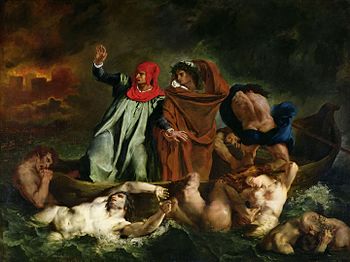
Imagine descending into the depths of your being, akin to Dante Alighieri’s magnificent odyssey through Hell, Purgatory, and Heaven. Shedding the layers of external facade, the masks we wear, we confront the quirks and idiosyncrasies hidden within. But the journey does not cease there, oh no! It beckons us further, deeper into the very core of our existence. And lo and behold, there we shall encounter our True Selves, guardians of the secret to our authentic identity.
The seven storey mountain.
Would you be interested to know what this inner exploration looks like? Well, it’s best to hear from those who have embarked on it, don’t you think?
One such intrepid explorer was Thomas Merton, a Trappist monk, writer, theologian, and mystic. His chronicle of enlightenment, ‘The Seven Storey Mountain,’ published in 1948, weaves together personal memoir and profound musings on the human condition, the pursuit of meaning, and the significance of faith.
Within Merton’s spiritual teachings, he delves deep into the concept of the True Self. According to his wisdom, the True Self embodies our genuine and authentic nature, often concealed by external influences, false personas, and the relentless ego.
For Merton, the True Self mirrors the divine essence within us, encompassing the deepest and most profound aspects of our being. It remains untainted by societal conditioning, fears, and illusions, yearning ceaselessly for union with the divine.
On the contrary, Merton unveils the false self—a fabricated mask we fashion to blend into society, garner approval, and shield ourselves from vulnerability. Driven by cravings for success, validation, and material possessions, the false self ensnares us in an unfulfilling cycle of emptiness and dissatisfaction.
To unearth the true self, Merton emphasizes the imperative of recognizing and transcending the false self. This arduous endeavor entails introspection, contemplation, and surrendering to the divine presence. Through transformative practices like meditation, solitude, and prayer, individuals can peel away the layers of the false self and forge a profound connection with their authentic identity.
The voyage toward the true self demands humility, self-awareness, and a readiness to release attachments and ego-driven desires. It beckons us to seek an existence anchored in authenticity and spiritual centeredness, emancipated from the veils of illusion and distractions woven by the false self, and anchored in sublime communion with the Divine.
The Red Book
Another audacious voyager was C.G. Jung, whose astounding odyssey unfolds within the pages of “The Red Book.” This grand opus, crafted from 1914 to 1930 but unveiled to the world in 2009, plunges deep into the recesses of Jung’s psyche and the enigmatic realms of the unconscious.
“The Red Book” is not your ordinary book. It’s a visual and written account filled with vivid imagery, calligraphy, and reflections. It’s a record of Jung’s expedition, a labyrinthine passage through the depths of the mind, where he encounters the fragments of his own being and the archetypal forces that shape our collective unconscious. It is a pilgrimage of self-discovery, a quest to embrace the fullness of our inner landscapes and navigate the intricate tapestry of the human experience.
Jung believed in the concept of individuation, where each individual possesses a unique and authentic self—the “Self” with a capital “S.” The true self, in Jungian psychology, represents the totality of one’s psyche, both conscious and unconscious, and seeks integration and balance.
The Internal Family Systems
Let us journey back to the present day, my fellow explorers, where we encounter a remarkable mind on the forefront of psychology: Richard Schwartz, the maestro behind Internal Family Systems (IFS) therapy.
In the realm of IFS, the True Self emerges like a natural thing when the mind casts off its burdensome clutter. It is the essence that dances to the rhythm of the soul, unencumbered by the cacophony of daily life. And oh, the True Self brings forth a treasure trove of wonders, my friends—a splendid satchel of goodies known as “The six C’s” by Schwartz. When you unlock this realm within, you embody compassion, connectedness, calmness, creativity, clarity, curiosity, confidence, and courage. Ah, what invaluable tools for a true adventure!
According to the IFS philosophy, each of us harbors an eclectic ensemble of internal parts—voices, beliefs, and desires. Among them are wounded exiles carrying the weight of past traumas, while protective warriors stand guard, safeguarding our sanity. The path to harmony lies in forging peace with these parts, a process aptly named Unblending. It grants us the power to observe and disidentify from our internal chorus. And take note of this, my friends, observation holds the key to unlocking the mysteries that lie within.
The True Self and the Kingdom of God.
So, let us unravel the intricate connection between the True Self and the elusive Kingdom, one step at a time. The words of Jesus beckon us, urging us to seek first the Kingdom of God, yet he also tells us that the Kingdom cannot be perceived by our earthly senses. A paradox, indeed! So, why embark on a quest for the unseen?
The answer lies within the very act of seeking itself. Ah, yes, my friends, the seeking is the essence of the journey. But be forewarned, for this kind of seeking demands a radical transformation of the mind. John the Baptist understood this profound truth, for he spoke of the need to change our very perception of reality. Within the depths of our being, the tools for this transformation lie dormant, waiting to be unleashed.
To access our essence, we must transcend the limitations placed by our memory. And how do we accomplish this, you ask? By observing every part of our being and unraveling the tangled threads that bind us and disidentifying ourselves from them. This process, my friends, is known as “unblending.” But let me assure you, it is not a simple endeavor. Doubt not my words, for you need only inquire of Thomas Merton, C. G. Jung, or Dante Alighieri themselves.
So, my Kingdom investigators, let us traverse this labyrinthine journey, of seeking, transforming, observing and disidentifying together. With each step, we inch closer to Terra incognita. Onward, my fellow seekers, for the journey awaits!

 Kingdom Scouts
Leave a comment